Share Dr. Karl Dwight Gregory's obituary with others.
Invite friends and family to read the obituary and add memories.
Stay updated
We'll notify you when service details or new memories are added.
You're now following this obituary
We'll email you when there are updates.
Select your format and elements to print


IN LOVING MEMORY OF Dr. Karl Dwight Gregory
Dr. Karl Dwight
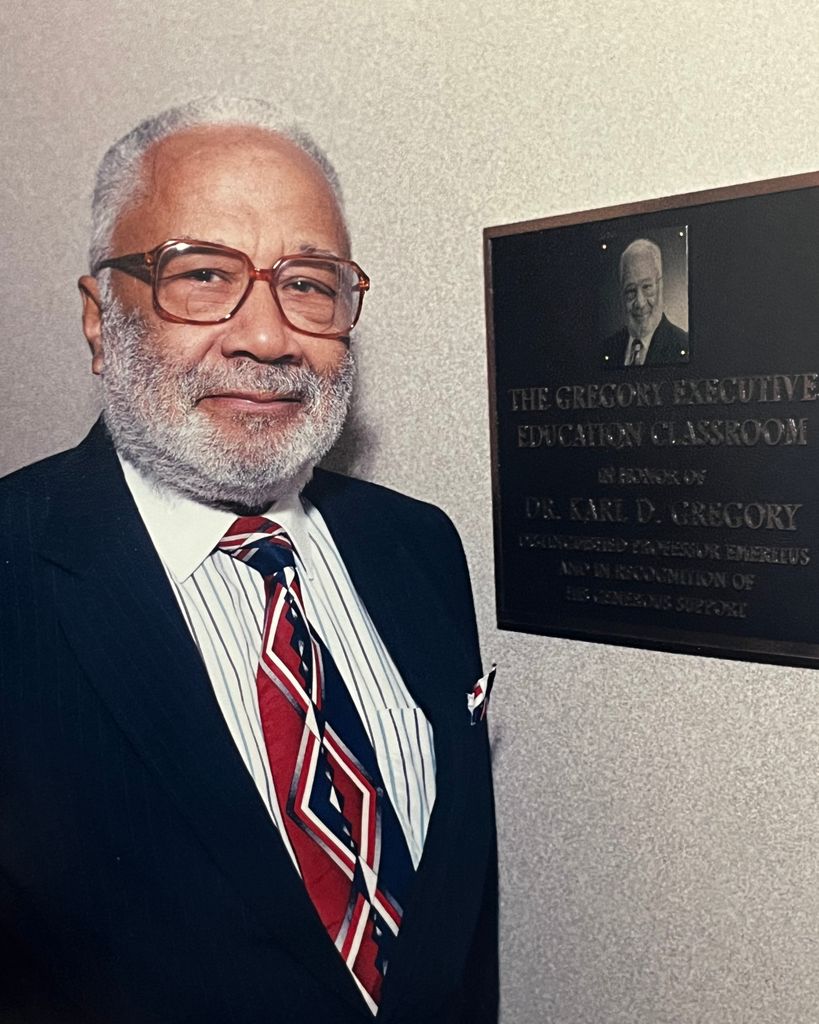
Gregory
Mar 26, 1931 — May 26, 2026
Dr. Karl Dwight Gregory's Obituary
DR. KARL DWIGHT GREGORY: A Life of Vision, Courage, and Enduring Impact
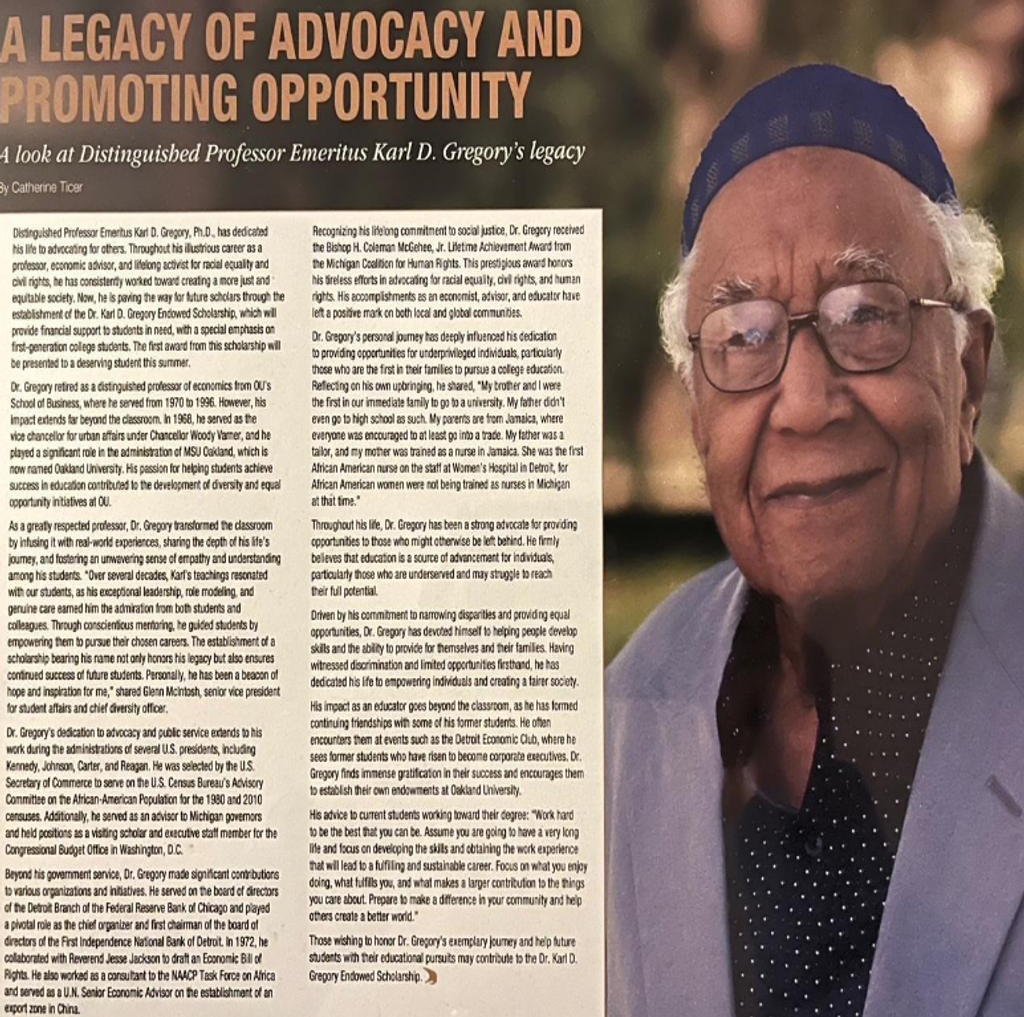
Dr. Karl Dwight Gregory—distinguished economist, educator, civil rights strategist, and institution builder—passed away on Tuesday, May 26, 2026 in Michigan after a remarkable life dedicated to advancing economic justice, intellectual rigor, and community empowerment. His legacy reflects not only personal excellence, but a profound and lasting contribution to the shaping of modern Detroit, national public policy, and global economic thought.
Born on March 26, 1931, in Detroit, Michigan, to Bertram Vincent Gregory and Sybil Wynter Gregory, Karl and his brother, Victor Gregory were raised within the vibrant Black communities of Hastings Street and Black Bottom in Detroit, Michigan (centers of culture, entrepreneurship,and resilience in an era defined by segregation). His parents, immigrants from Kingston, Jamaica,instilled in him a deep respect for discipline, education, faith, and global awareness, all of which were values that would guide him throughout his life.
As a child, Gregory spent formative years in Kingston, Jamaica, under the guidance of his uncle, Dr.Oswald Anderson, then Mayor of Kingston. There, he developed an early understanding of governance and global systems. These perspectives would later inform his work as an economist and public intellectual. Upon returning to Detroit, he confronted the stark realities of racial segregation,experiences that deeply shaped his lifelong commitment to equity and systemic reform
A gifted student, Gregory entered Wayne State University at the age of fifteen. After early academic challenges, he found his calling in economics. This discipline allowed him to analyze inequality, not as a personal failing, but as a structural condition requiring thoughtful intervention. He earned both his Bachelor’s (1952) and Master’s (1957) degrees from Wayne State, working multiple jobs to support himself, before going on to receive his Ph.D. in Economics and Finance from the University of Michigan in 1962.
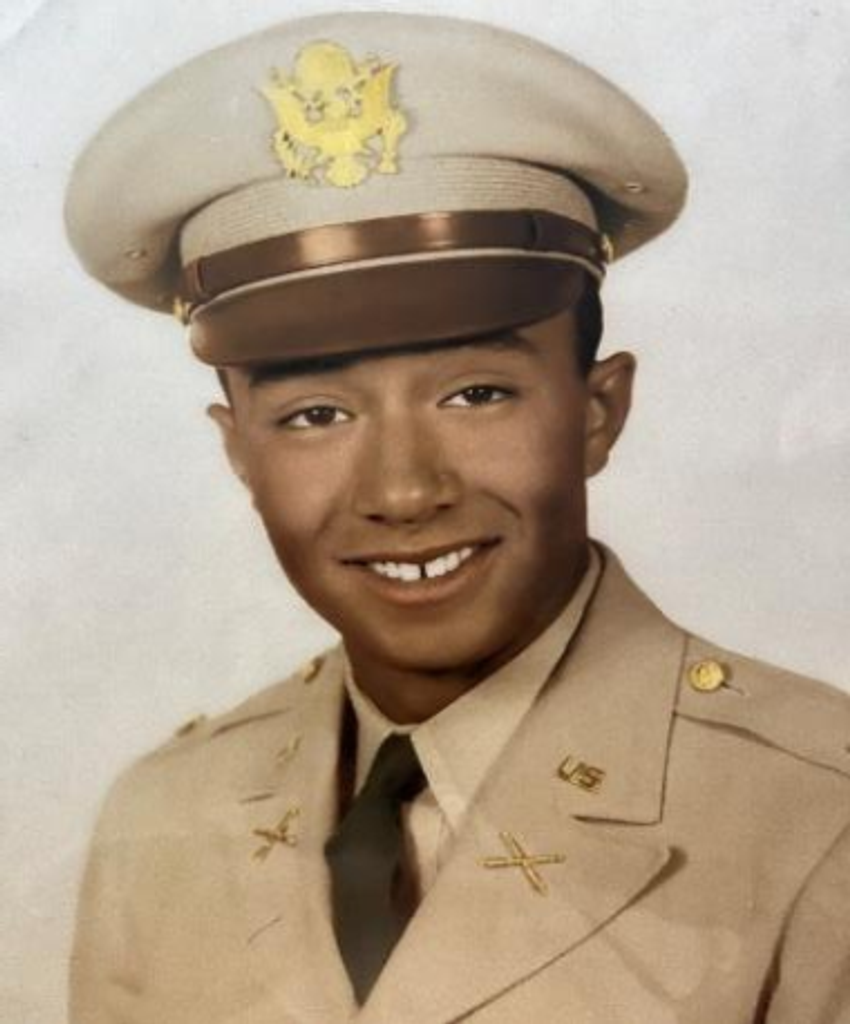
Dr. Gregory served with distinction for his country as a First Lieutenant in the United States Army from 1953 to 1956, before embarking on a prolific professional career. Stationed in Germany, he observed postwar reconstruction and gained a broader global economic perspective.These experiences reinforced his belief in the power of public policy and institutional design to shape more equitable societies.
His professional career spanned academia, government, finance, and international development. He served as a Fiscal Economist in the U.S. Office of Management and Budget during the Kennedy and Johnson administrations, from 1961 to 1964 and later as a visiting scholar with the U.S. Congressional Budget Office. Also, under Presidents Ford, Carter, and Reagan he helped shape federal budget policy, while confronting racial discrimination firsthand. His response was not resignation, but action, through leadership in the Congress of Racial Equality (CORE), he challenged discriminatory housing practices and worked toward meaningful civil rights reform.
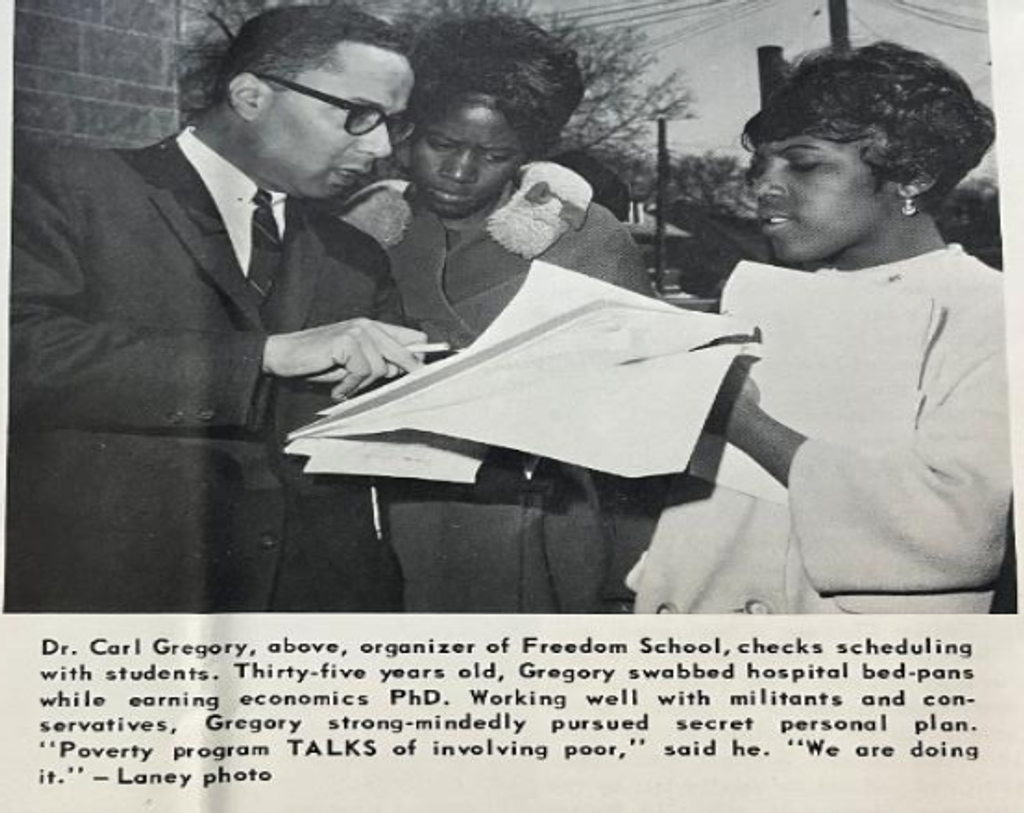
Following the 1967 Detroit uprising, Dr. Gregory returned to his hometown determined to help rebuild, not through symbolic change, but through the creation of enduring institutions. He became a central figure in advancing Black economic empowerment, founding and leading organizations such as ACCORD, Inc., and helping to establish the Inner-City Business Improvement Forum.
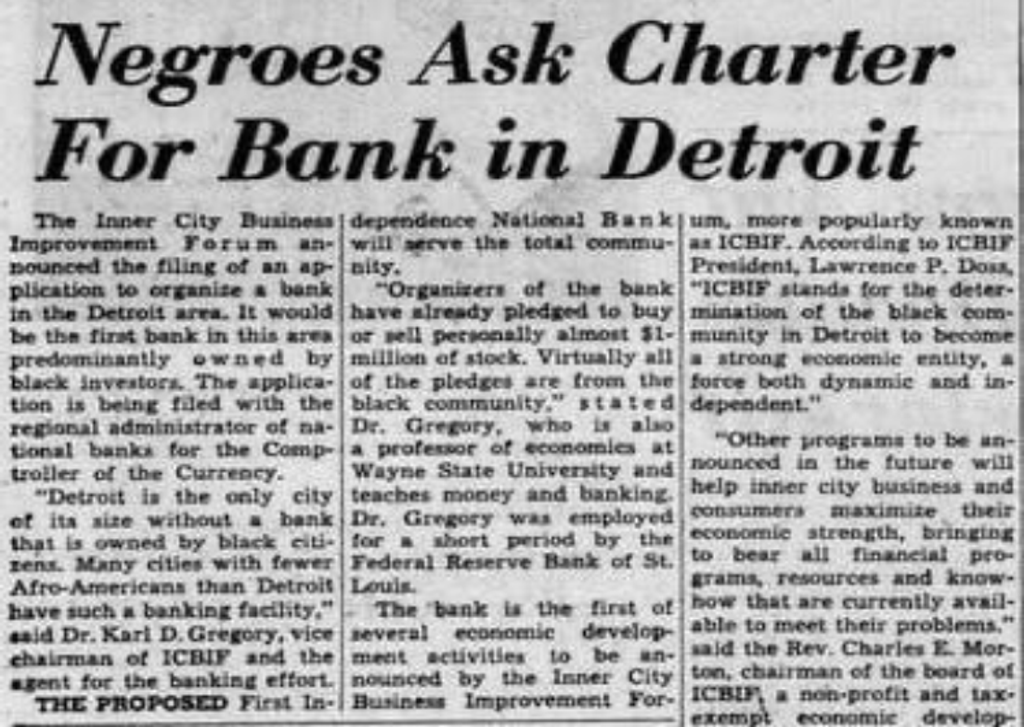
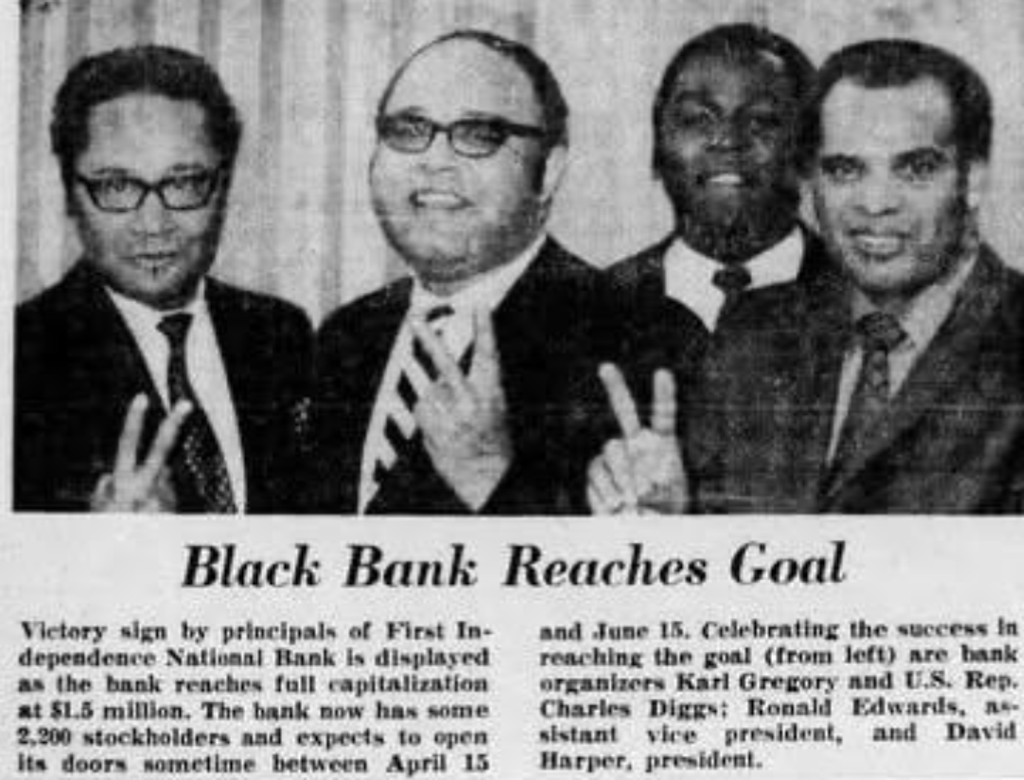
Dr. Gregory was an early president of the National Economic Association. In 1962, he was when he was denied the opportunity to buy a home in an upscale neighborhood in Bowie, Maryland,based on race, he organized extensive long-running protests which helped contribute to the passage of the 1968 Civil Rights Act. He was also instrumental in the founding and leadership of First Independence National Bank, one of the nation’s most prominent Black-owned financial institutions, where he served as chairman and interim president. Later, as Chairman and CEO of Greater Detroit BIDCO, he worked to expand access to capital for minority-owned businesses,reflecting his unwavering belief that economic equity requires ownership, access, and institutional strength.
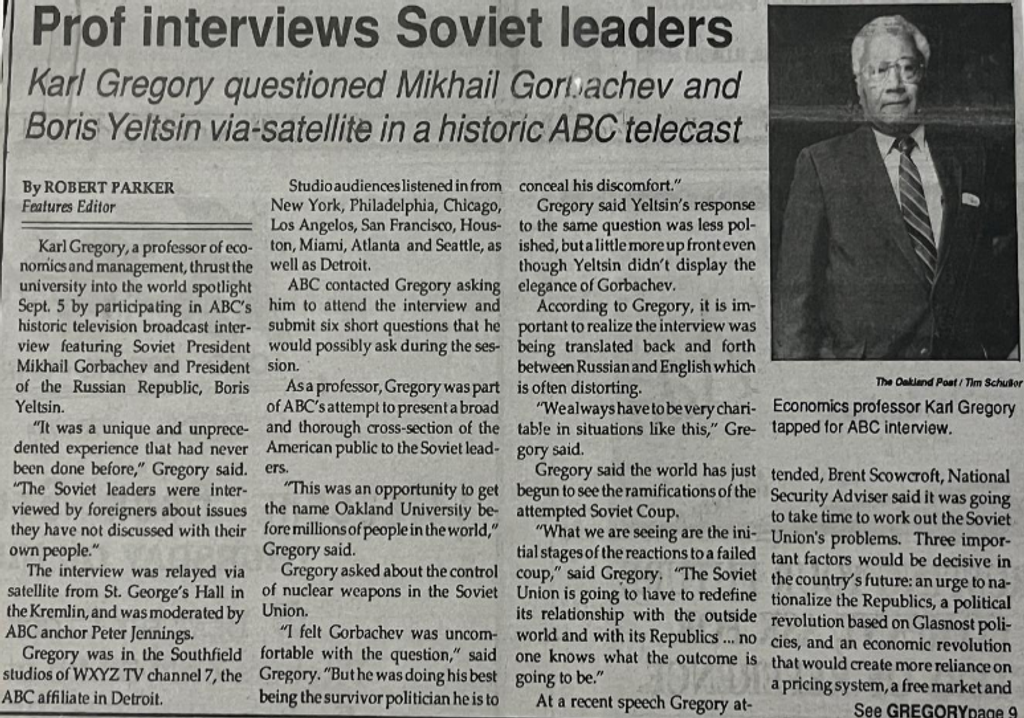
Dr. Gregory’s influence extended far beyond Detroit. He served as a senior economic advisor to China through the United Nations in 1991, participated in global dialogues on economic systems,and engaged with leaders across continents, including involvement in a historic televised dialogue with Mikhail Gorbachev and Boris Yeltsin. His global reach was matched by his deep local commitment.
As an educator, Dr. Gregory taught at Wayne State University, SUNY Buffalo, and Oakland University, where he served from 1968 until his retirement in 1996 as Distinguished Professor Emeritus. He was widely admired for his intellectual rigor, clarity of thought, and dedication to mentoring students who would go on to leadership roles in business, government, and public service.
Throughout his life, Dr. Gregory received numerous honors, including the NAACP Detroit Research Award, the U.S. Small Business Administration Minority Business Advocate Award,and the Detroit Urban League’s Distinguished Warrior Award for Lifetime Service to Social Justice and Civil Rights. These recognitions reflect a life lived at the intersection of scholarship,service, and moral courage.
Beyond his professional accomplishments, Dr. Gregory was a devoted family man. He shared a lifelong partnership with his beloved wife, Tenicia Ann Banks Gregory, who preceded him in death. Together, they built a family grounded in love, strength, and excellence. He is survived by his children, Karin Diane Gregory, Sheila Therese Gregory (Stephen Lee Brown), and Kurt David Gregory, and his grandchildren, Courtney Gregory Jones and Anthony Gregory Jones.
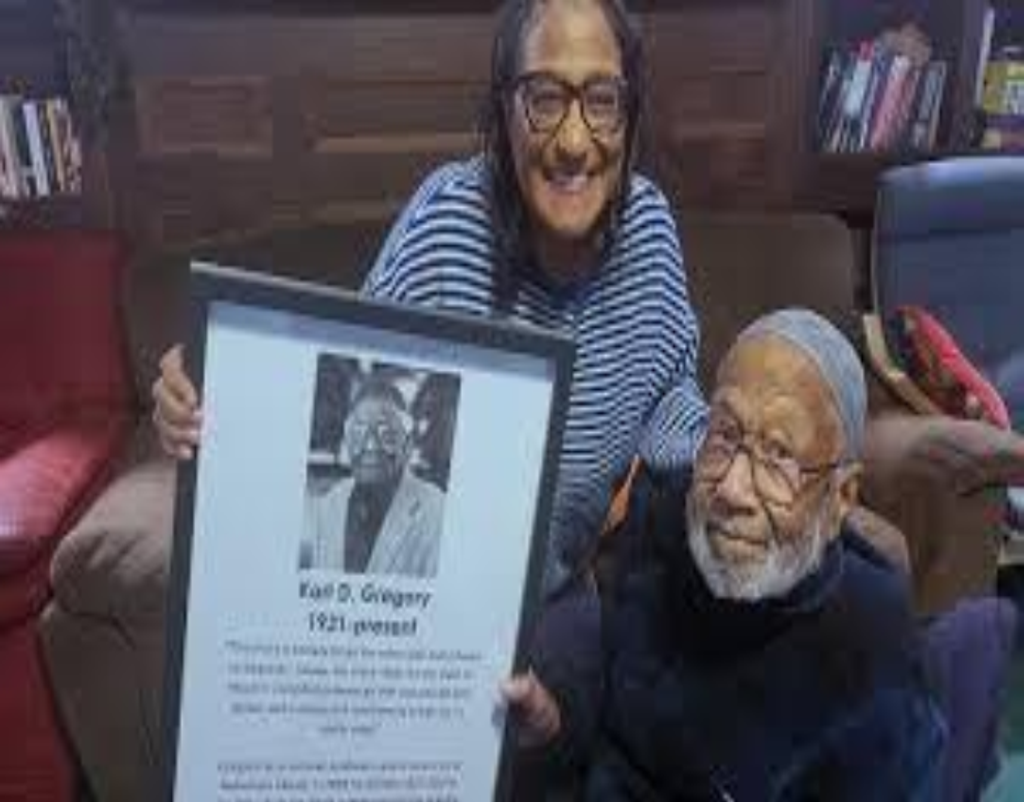
Dr. Gregory’s legacy is also carried forward through the Dr. Karl D. Gregory Endowed Scholarship at Oakland University and the cooperative house at the University of Michigan, Ann Arbor that bears his name (Dr. Karl D. Gregory House), located at 1617 Washtenaw Street, after he put down a significant down payment for them to purchase the 21-bedroom home for the students. The Dr. Karl D. Gregory House is a living testament to his commitment to education,access, diversity, collaboration, equality, equity, and collective advancement.
Dr. Karl Dwight Gregory lived a life of uncommon purpose. He believed that justice must be built, not merely declared, and he dedicated his life to constructing the intellectual, institutional,and moral foundations necessary for a more equitable world.
He will be remembered not only for what he achieved, but for what he made possible for others.
The Celebration of Life will be held on Saturday, June 20, 2026, from 2:00 p.m. – 4:00 p.m., at Oakland University, 2200 N. Squirrel Rd., Rochester, MI 48309, where Dr. Karl D. Gregory was Distinguished Professor Emeritus of Economics. In lieu of flowers, donations can be made to the Dr.Karl D. Gregory Endowed Scholarship Fund (https://www.oakland.edu/giving/ways-togive/list-of-funds/and enter fund (61664) at Oakland University, where Dr. Gregory taught for nearly 3 decades.
HIS LIFE WAS A BLUEPRINT FOR COURAGE, INTELLECT, AND ENDURING IMPACT. HIS LEGACY WILL CONTINUE TO GUIDE GENERATIONS TO COME.
Funeral Services for Dr. Karl Dwight Gregory
Celebration of Life

Saturday
Oakland University - Oakland Center
2:00 - 4:00 pm (Eastern time)
Floral arrangements can be delivered after 11 am to Oakland Center
Dr. Karl Dwight Gregory's Guestbook
Visits: 474
This site is protected by reCAPTCHA and the
Google Privacy Policy and Terms of Service apply.
Service map data © OpenStreetMap contributors